
Last updated
How Do Porta Potties Work?
A standard unit is a self-contained box, about 44 by 48 inches on the ground and roughly 92 inches tall, sitting over a holding tank. Waste drops straight into the tank, which holds a chemical treatment that breaks down solids, knocks back odor and keeps things from foaming when the truck pumps it out. There's no water line and no sewer connection, which is why you can drop one on a job site in Weston with zero plumbing work. A vent stack pulls odor up and out instead of into the stall. For construction crews, a construction worker porta potty usually sits near the trailer or entrance so it's fast to reach between tasks. OSHA 1926.51(c) sets the toilet count for construction sites: one facility for 20 workers or fewer, then one toilet and one urinal per 40 workers as the crew grows. If you're not sure how many your site needs, the porta potty placement guide walks through spacing and access alongside the counts in how many porta potties do I need.
How Does a Flushable Porta Potty Work?
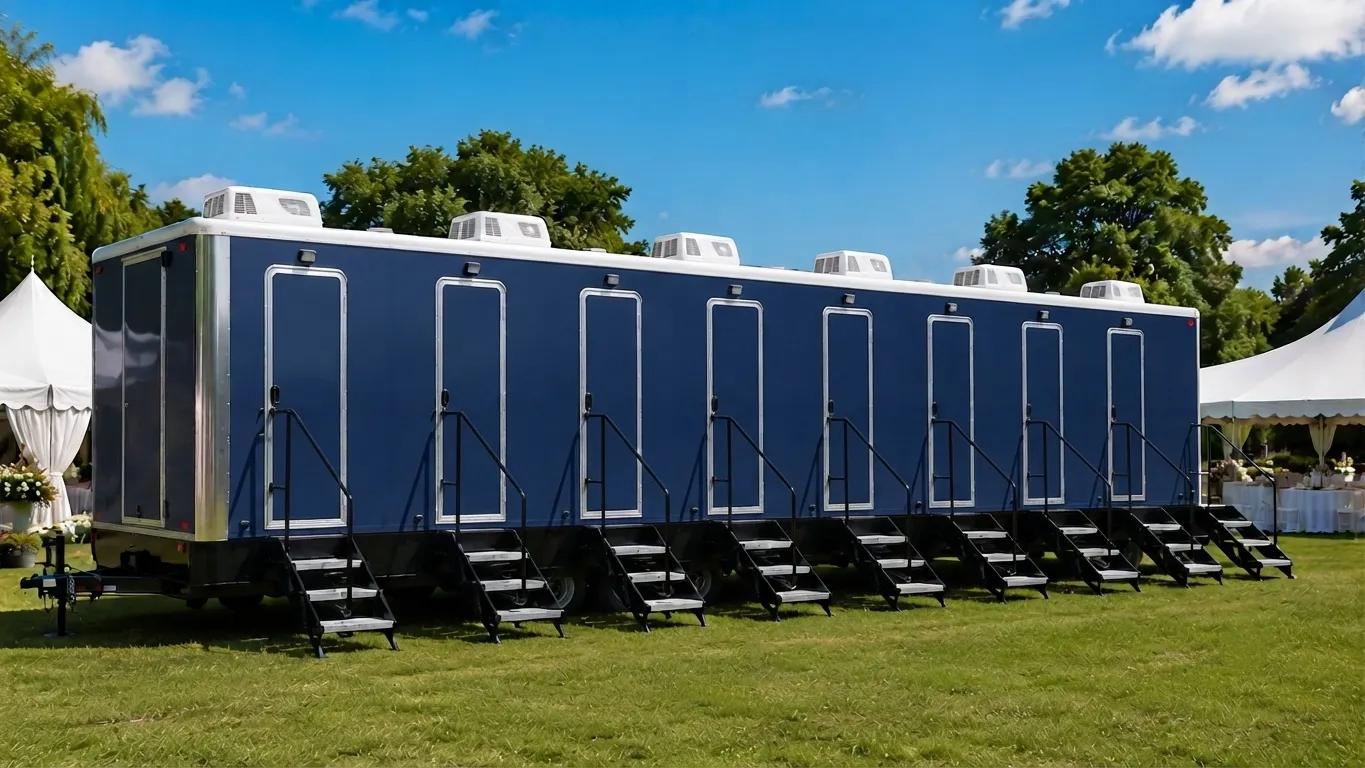
A flushable unit adds a small onboard freshwater tank and a foot pump or hand pump that pushes a rinse of water through the bowl after use, into the same holding tank below. It doesn't connect to a sewer line, it just recycles a small reservoir to clear the bowl visually, which cuts down on residue and smell compared to a standard unit. These are what most people mean by a deluxe flushable porta potty, and they're common at weddings and higher-traffic events around Weston where guests expect something closer to a real bathroom. The tank still needs the same chemical treatment and pump-out schedule as a standard unit. If you're comparing options for an outdoor event, the event restroom rental and wedding restroom rental pages break down what fits different guest counts, and portable restroom rental covers the broader lineup.

How Does a Portable Sink Work?
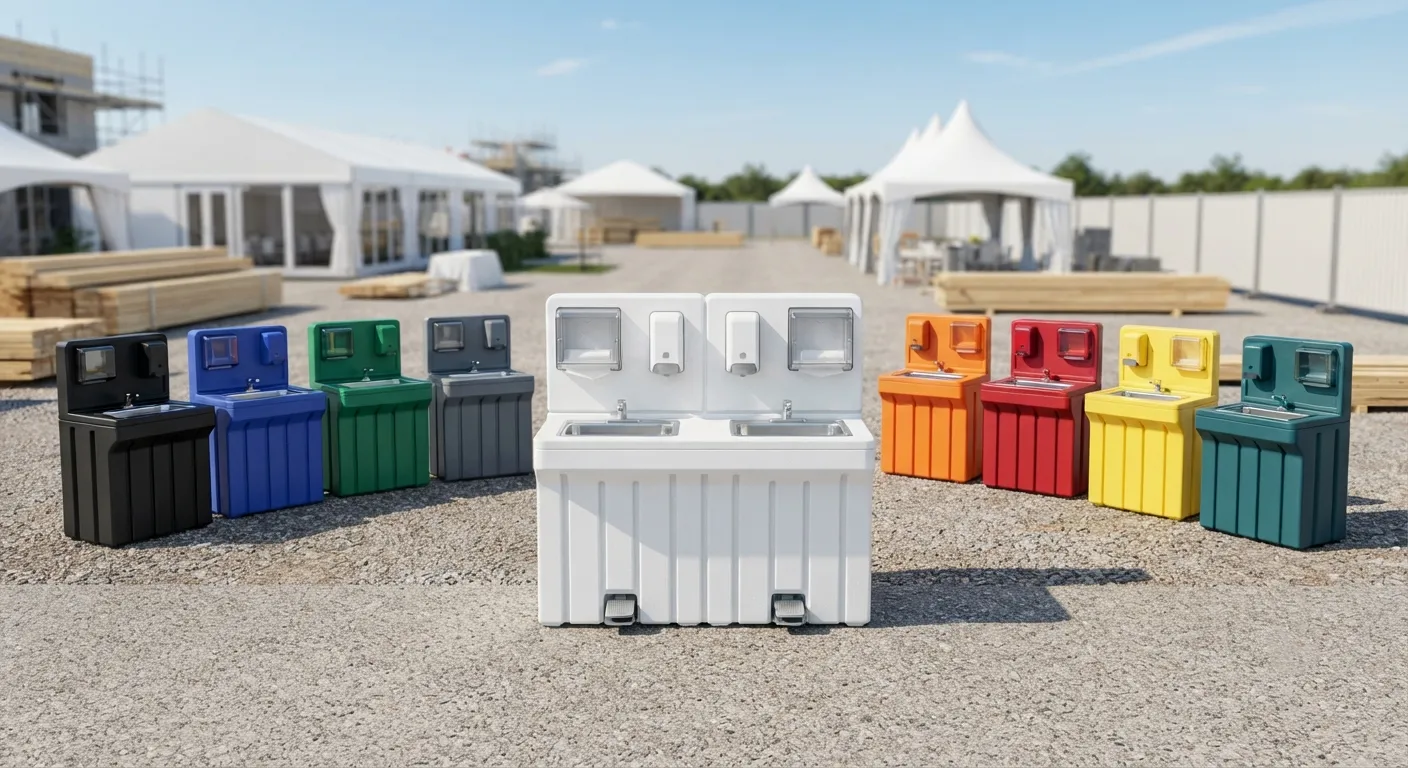
A portable sink runs on the same no-plumbing principle: a freshwater tank feeds the faucet, usually by foot pump or a small onboard pump, and greywater drains into a separate holding tank underneath instead of into the ground. Soap and paper towels are required under 29 CFR 1910.141(d)(2), which specifically says hand sanitizer doesn't satisfy the standard on its own. That matters most in food service or medical settings, but crews doing painting, coating or pesticide work also need washing facilities under OSHA 1926.51(f)(1), which covers exposure to paints, coatings, herbicides and insecticides specifically, not general handwashing. A handwashing station rental or portable sink rental gets you a compliant setup fast, and the handwashing requirements page lays out where each rule applies. Some sites pair a sink with a hand sanitizer station rental as a supplement, not a replacement.
How Do Camping Porta Potties Work?
Camping and off-grid units work the same way as a jobsite unit, just usually smaller and easier to move, since there's no water or power hookup needed either way. The tank and chemical treatment do the same job: breaking down waste and controlling odor until the next service. For a weekend trip or a short event, porta potty rental per day and the standalone camping porta potty option cover most needs without committing to a full week. Weston Porta Pros delivers throughout Weston and into nearby towns, including Southwest Ranches about 7.3 miles southeast and Cooper City around 12.2 miles southeast, so a weekend camping trip or backyard event near either town is easy to cover on the same route. Longer stays make more sense as a monthly porta potty rental once you're past a week or two.
| duration | typical price |
|---|---|
| day | $150 |
| week | $200 |
| month | $200 |
| event | $400 |
Prices above reflect a standard unit; full ranges and what drives them up or down live on porta potty rental cost.
Why do porta potties smell sometimes?
Odor control depends on the chemical treatment level and how full the tank is getting, not the unit itself. A tank nearing capacity or overdue for service will smell regardless of how well it's built. Weekly service is the baseline under ANSI/PSAI Z4.3 for moderate use, and the how often are porta potties cleaned and do porta potties smell pages go deeper on schedules.
What chemicals go in a porta potty tank?
The tank uses a blue deodorizing chemical designed to break down solids and mask odor between pump-outs, similar in concept to septic tank cleaning chemicals used in a home system. It's not something you buy at a hardware store for a home toilet. Weston Porta Pros supplies and manages this as part of every rental, so you're not sourcing it yourself.
Can I get an ADA accessible porta potty in Weston?
Yes. ADA Standards section 304.3.1 calls for a 60 inch turning circle inside the unit, and section 213.2 requires at least 5 percent of clustered units to be accessible, never fewer than one. The ADA accessible porta potty page covers dimensions and pricing for Weston deliveries.
How does pumping and cleanout actually work?
A vacuum truck connects to the tank, pulls the waste and rinses it, then the chemical treatment gets refreshed before the unit goes back into use. It's the same basic process whether it's a jobsite unit or a home's septic tank cleaning. Grease interceptors follow a different trigger, pumped once fats, oils, grease and solids hit 25 percent of the liquid depth.
Do I need a permit for a porta potty in Weston?
Placement in the public right-of-way needs confirming with the city before delivery. Weston Porta Pros can help figure out where a unit legally sits on private property versus city-controlled space. Check porta potty permit requirements before your delivery date to avoid a last-minute move.
Next step
Get a delivery date
Tell us the address, the dates and the headcount. We size the order and confirm the route.