
Last updated
How Often Does a Septic Tank Need Pumping?
Three to five years is the general rule for a standard residential tank, but that range moves depending on how many people live in the house and how big the tank actually is. A larger household pushes more solids into the tank every week, so a family of six on a 1,000 gallon tank pumps more often than a couple in the same size tank. Weston Porta Pros looks at both numbers before setting a schedule, not just the calendar. If you are unsure which end of that range applies to you, our septic tank pumping cost page breaks down what drives the interval, and how often to pump a septic tank walks through the household math in more detail. Homes on private septic near Southwest Ranches, 4.2 miles east, or out toward Cooper City, 6.8 miles north, tend to follow the same interval unless the tank is undersized for the house. Waiting too long is the expensive mistake. A tank that backs up into the yard or the basement costs more to fix than a routine pump ever would, and it is the reason we also run emergency septic service for calls that cannot sit on a schedule.
What Are the Warning Signs a Septic Tank Needs Pumping?
Slow drains in every fixture at once, gurgling pipes, and standing water or a soggy patch over the drain field are the three signs that show up first. Any one of those on its own might be a clogged line, but all three together usually means the tank itself is full and backing pressure up through the system. A sewage smell near the tank lid or drain field is another sign, and it should not wait. Sinks and tubs draining slower than usual across the whole house, rather than just one fixture, points at the tank rather than a local clog. See our full breakdown on septic tank warning signs for what each symptom usually means before you call anyone out. If you are dealing with a backup right now rather than a slow warning sign, skip the diagnosis and go straight to emergency septic service. Weston Porta Pros treats a backup as a same-day priority, not a next-week appointment, because raw sewage on a property is a health issue as much as a plumbing one.

What's Included in a Septic Pumping Service?
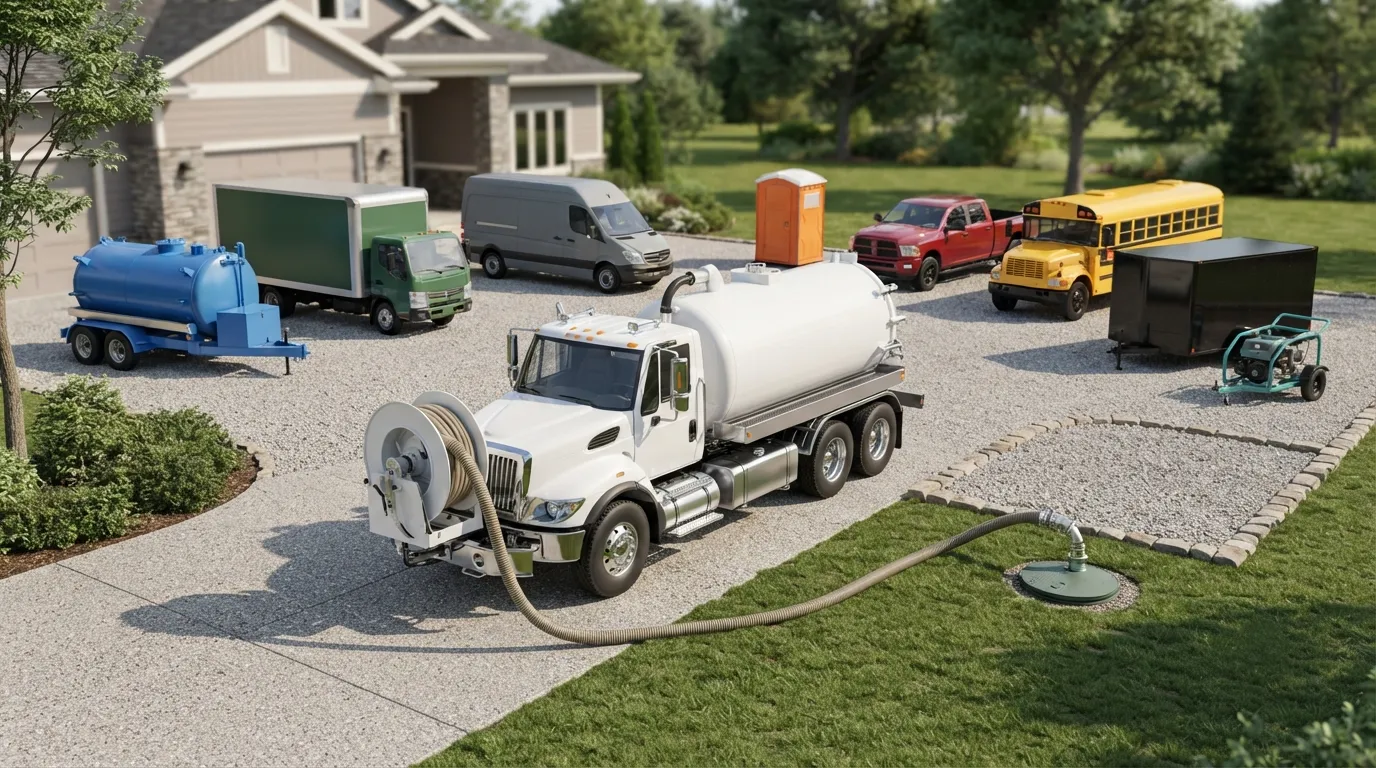
A standard visit includes locating and uncovering the tank lid, pumping the tank down completely, and a basic check of the baffles and the tank walls while the crew is already down there. We are not just pulling liquid and leaving. A thorough pump-out gets the solids off the bottom and the scum layer off the top, not just whatever liquid sits in the middle. For homes with a grease interceptor rather than a standard septic tank, the interval works differently. A grease interceptor gets pumped once fats, oils, grease and solids reach 25 percent of the liquid depth, which is a volume-based trigger rather than a time-based one, and it is covered separately on our grease trap pumping page. Commercial kitchens in Weston should check that page rather than assume the residential 3 to 5 year window applies. For a property without existing septic infrastructure at all, such as a construction trailer or a remote job site, a holding tank rental is a different product entirely, and we cover both new installs and service calls on the same crews.

How Much Does Septic Tank Pumping Cost?
Pricing depends mostly on tank size and access, and day-rate septic pumping in Weston runs in the band below. A tank buried under a deck or behind heavy landscaping costs more to reach than one with a clear lid at grade, and that access difference is usually the biggest swing factor after tank size itself.
| service | duration | typical range |
|---|---|---|
| septic pumping | day | $150 to $300 |
| septic pumping | weekend | $50 to $150 |
The weekend figure above reflects a smaller call, not a full tank pump-out; a true emergency backup on a weekend is priced through our emergency septic service line rather than the standard weekend rate. For the full cost breakdown, including what changes the price up or down, see septic tank pumping cost. If your issue is really a full septic pumping service versus a lighter tank cleaning, our septic tank cleaning page explains the difference between the two service types so you are not paying for more than the job needs.
Do You Offer Holding Tank Service for Properties Without Septic?
Yes. A holding tank is a sealed tank with no drain field at all, common on construction sites and properties waiting on a septic install, and it needs pumping on a schedule based purely on usage rather than the 3 to 5 year window that applies to a real septic system. Job sites around Weston running a holding tank rental usually pair it with other construction site services like a standard porta potty rental or a roll-off dumpster rental so the whole sanitation and waste side of the site is handled by one crew. Agricultural properties have their own rule here: OSHA 1928.110 requires potable water, toilets and handwashing for hand-labor employees, at one facility per 20 employees, within a quarter mile walk, which matters for farms running field crews near Weston. See farm and agricultural restrooms for how that plays out on a working farm.
What Happens in an Emergency Septic Situation?
A backup that puts sewage into a yard, a basement, or a drain field needs a same-day response, not a scheduled slot next week. Weston Porta Pros treats a septic emergency as a priority call and dispatches accordingly, because standing sewage is a health hazard on top of being a mess. Our emergency septic service page has more on response windows and what to expect. If the same property also needs an emergency porta potty rental while the septic system is offline, that request can go through the same call. Properties farther out, such as those near North Lauderdale, 8.1 miles east, or Southwest Ranches, 11.4 miles north, are still within normal response range for our crews. For the full service footprint, check service areas, or start with porta potty rental in Weston if you need combined services on one property.
How much does septic tank pumping cost near me?
A day-rate septic pumping visit in Weston runs $150 to $300 depending on tank size and access. A weekend call for a smaller issue runs $50 to $150. Full pricing detail, including what pushes a job to the high end, is on septic tank pumping cost.
How often should a 1,000 gallon septic tank be pumped?
Every 3 to 5 years is typical for a 1,000 gallon tank, though household size shifts that window. A larger family fills the tank faster. See how often to pump a septic tank for the household math behind that range.
What's the difference between a septic tank and a holding tank?
A septic tank drains into a leach field after solids settle out. A holding tank is fully sealed with no drain field, so it needs pumping based on usage alone. Construction sites and pre-install properties typically use a holding tank rental instead.
Can I schedule septic pumping on a weekend?
Yes, weekend septic service is available and runs $50 to $150 for smaller calls. A full emergency backup on a weekend falls under emergency septic service pricing instead of the standard weekend rate.
Do you pump grease interceptors too?
Yes. A grease interceptor gets pumped once fats, oils, grease and solids reach 25 percent of the liquid depth, not on a fixed calendar. Commercial kitchens should see grease trap pumping for that separate schedule.
What are the warning signs my septic tank is full?
Slow drains across the whole house, gurgling pipes, and standing water over the drain field are the main signs. A sewage smell near the tank is another. Full detail is on septic tank warning signs.
Next step
Get a delivery date
Tell us the address, the dates and the headcount. We size the order and confirm the route.